Showing posts with label Traditional Sweets. Show all posts

Tuesday, September 26, 2017

Sooji Halwa Recipe | Suji Halwa | Rava Sheera Recipe

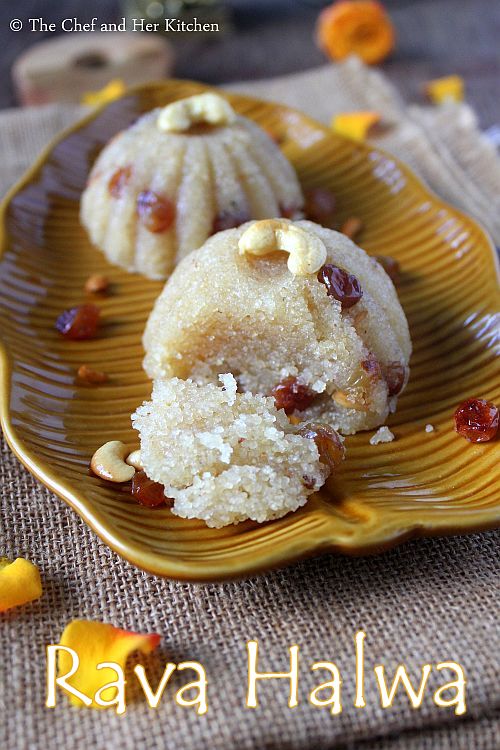
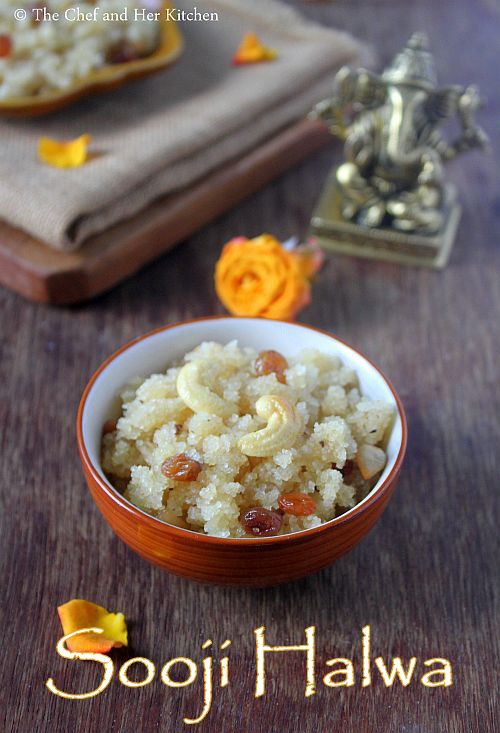
sooji halwa
Sooji halwa recipe with step by step photos.Sooji halwa is one of the most easiest desserts which can be prepared in no time and makes an excellent dessert or a simple sweet or prashad.South Indians make Rava Kesari which is similar to sooji halwa with added kesar color where as sooji halwa is commonly prepared in the other parts of the country.Sooji halwa is usually prepared along with puri and dry black chickpeas on the eighth day(Ashtami) during Navaratri in north India and is prepared for any festivals like Ganesh chaturthi,Navaratri etc.
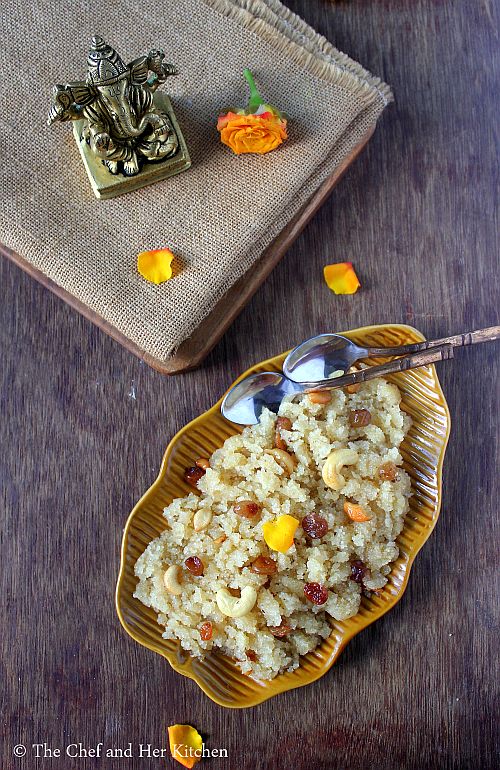
sooji halwa
I am posting a basic version of Sooji halwa, there are no hard and fast rules for preparing this halwa, the recipe I am posting has just right sweetness the way my family prefers but you can increase the sugar and ghee quantities according to your requirements.Sometimes I add fresh fruits like apple,banana,mango,pineapple to the sooji halwa to make it in different flavors.
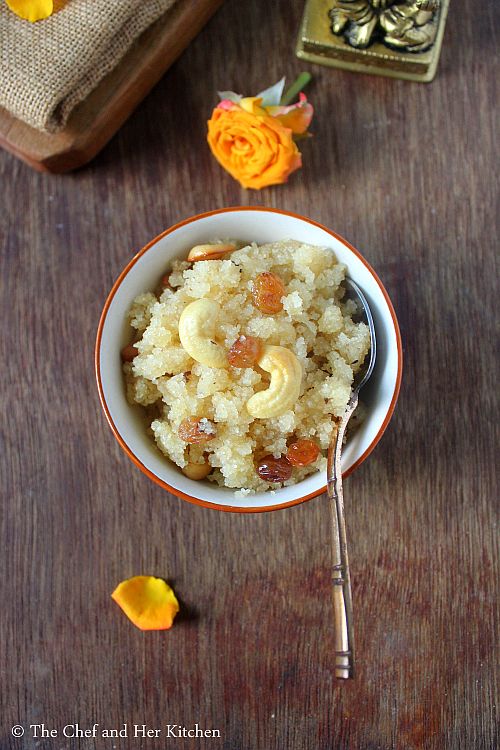
sooji halwa

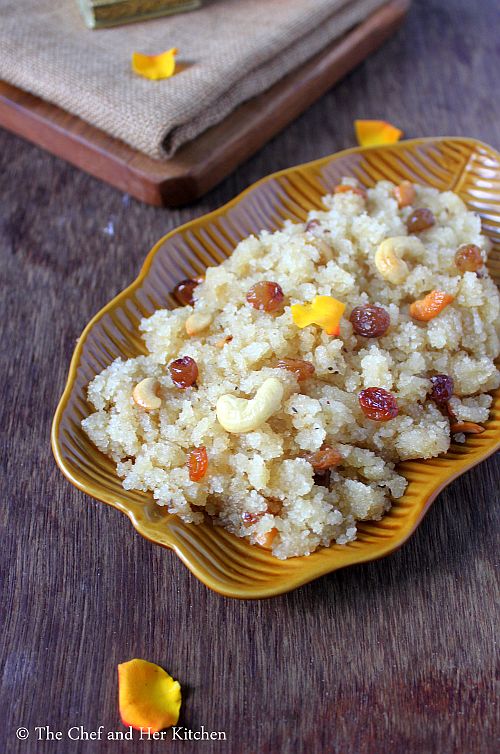
sooji halwa
If you want to make the sooji halwa rich add milk or a mix of milk and water in the ratio as mentioned and proceed with the same recipe.The addition of nuts again is individual choice,I even add roasted almonds along with cashewnuts and raisins which adds a nice bite to the halwa.I sometimes add saffron to the halwa instead of cardamom powder.If you are preparing the halwa for prashad you can add a pinch of edible camphor which gives a divine taste to the halwa.I prefer to make sooji halwa rather than Rava kesari as I am against the usage of synthetic colors in our regular food.
rava sheera
Check out other halwa recipes in my blog:
rava halwa
Here is how to make sooji halwa recipe with step by step photos.
Sooji Halwa | Rava Sheera Recipe:
Serves 2-3
Prep time: NIL | Cooking time: 20 mins | Total time: 20 mins
Cuisine: Indian | Category: Dessert

Ingredients:
1/2 cup Sooji/Rava
1/3 cup Sugar
3-4 tbsp Ghee+ 1 tbsp Ghee
1 1/4 cups Water
1/2 tsp Cardamom powder
7-8 Cashew nuts,chopped
2 tbsp Raisins

Method:
  • Heat ghee in a thick bottomed kadai and add cashewnuts and fry them until they turn light brown in color and remove them and then add raisins and fry them until they swell up and remove them and keep aside.
  • In the remaining ghee add rava and roast it on low flame until you get nice aroma from it.
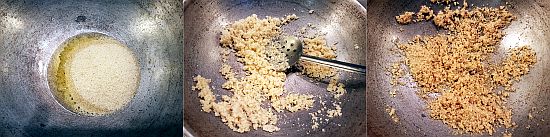
  • Meanwhile boil water in another container and pour this water in the roasted sooji and keep stirring it continuously and let it cook until done.You can even boil the sugar in the water and add it to the roasted sooji and mix.
  • Add sugar to it and cook further,initially the mixture will become watery.Let it cook further until it is done.
  • Add cardamom powder, fried cashew nuts,raisins and 1 tbsp ghee and mix it nicely.
  • Cover it and leave it for a while.
Serve it hot/warm or at room temperature.

Notes:
  1. This is mildly sweet,if you want it more sweeter add 1-2 tbsp of sugar to it.
  2. The addition of ghee at the end will keep the halwa soft and does not harden after it sits for a while too.
  3. You can prepare it in complete milk or mix of milk and water using the same ratio as mentioned.
  4. You can increase the water to 11/2 cups for a soft halwa.
  5. You can even add roasted almonds,chopped figs in the halwa for a richer taste.Instead of cardamom powder you can add saffron soaked in hot milk which gives a nice flavor and color to the halwa.
  6. You can prepare various fruit based halwas like banana halwa by addding chopped banana at the end and cook for a minute or by adding chopped mangoes to make mango halwa.You can add finely chopped apple pieces,pineapple pieces while boiling the water and proceed with the same recipe for apple halwa and pineapple halwa.
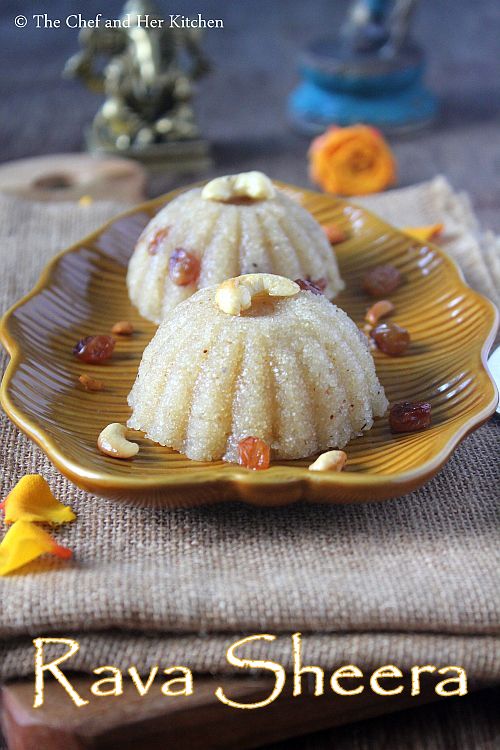
rava sheera

Monday, August 21, 2017

Fried Modak Recipe | Ganesh Chaturthi Recipes

fried modak
Fried Modak recipe with step by step photos.Ganesh Chaturthi is nearing by and we are all excited to welcome Ganapati Bappa to shower his blessings on us.Ganesh Chaturthi or Vinayaka Chavithi is one of the major festivals in the south and Maharasthra and is celebrated in a grand manner.Every year I wait for this festival as it is one of my favorite festivals which I have thoroughly enjoyed celebrating it from my childhood.Though the pooja process is bit lengthy it was really fun as this is the only festival where our entire family sit together and do pooja till the end with so much of attention.The menu for this festival is almost fixed every year due to the restrictions of the ingredients to be used and also they are apparently lord Ganesha's favorites.
fried modak
Our usual menu on this festival includes Nooka Idli(not the regular idli rawa one) with coconut chutney for breakfast and of course kudumulu are served along with breakfast and the lunch menu varies with different vegetables,sundal,rasam,dal and also we make different lentil dumplings for this festival especially.We prepare various Kudumulu varieties like Steamed Kudumulu - with 3 fillings, karida kayi kadubu and Undralla payasam.
Fried Modak Recipe:

Yields12-14 pieces
Prep time:30 mins | Cooking time:30 mins | Total time: 1 hr
Cuisine: South Indian | Category: Sweets/Festival Specials

Ingredients:
for outer layer:
1 cup Maida/All purpose flour
1/2 cup Chiroti Rava(fine rava)
a pinch of Salt
1 tbsp hot Oil

for stuffing:
1 cup grated Coconut
1 cup grated Jaggery
1/2 tsp Elaichi powder

Oil,for deep frying

Method:
for covering:
  • Mix maida,rava,salt and oil and add enough water to form a stiff dough.It should be stiffer than the regular chapati/poori dough.
  • Keep aside for 1/2 an hour and cover it with wet cloth.
  • Knead the dough well until it becomes soft and pliable.Make small gooseberry sized balls and keep them ready.
 for coconut stuffing:

  • In a kadai mix grated coconut and jaggery and cook it on a low-medium flame until the jaggery melts and coats the coconut and form a thick dry and sticky lumpy mixture.It takes 10-12 minutes and keep stirring it occasionally.
  • Add cardamom powder to it and mix well and let the mixture cool completely and store it in air tight container.Make small gooseberry sized balls and keep them ready.
  • You can make it on the previous day itself and store at room temperature which eases the process on the festival day.
for fried modak:
  • Make small balls from the maida dough and roll it out to very thin chapatis of 3" diameter.
  • Place a tablespoon of stuffing in the center and start making the pleats like how we do for momos and bring it to the center and pinch it slighlty to seal the pleats so that stick to each other.Refer the pictures for details.You can even pinch the edges and bring all the pinched folds to the center and gently pinch again to let them stick at the center.Seal the edges nicely else the filling will come out while frying them in oil.
  • Repeat the process and prepare all the modaks.
  • Heat oil in a thick bottomed kadai and once the oil is hot enough add 6-7 modaks slowly in the hot oil and let them fry over low-medium flame until they are golden brown and cooked thoroughly.Turn them in between so that they are evenly fried.
  • Drain them on a kitchen towel.
Serve them hot/warm or room temperature.

Notes:
  1. You can even use wheat flour in the recipe and avoid chiroti rawa in the recipe.But chiroti rawa makes the modak's outer layer crispier.
  2. You can even add sesame seeds or finely chopped cashewnuts to the coconut filling for extra crunch.
  3. Seal the edges nicely else the filling will come out while frying them in oil.
  4. You can even replace jaggery with sugar and follow the same recipe.
fried modak

Thursday, March 9, 2017

Rasmalai Recipe | How to make Rasmalai recipe

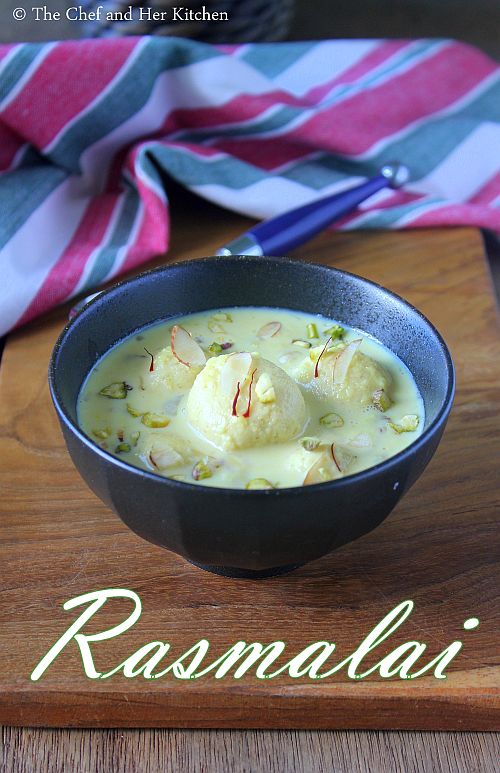
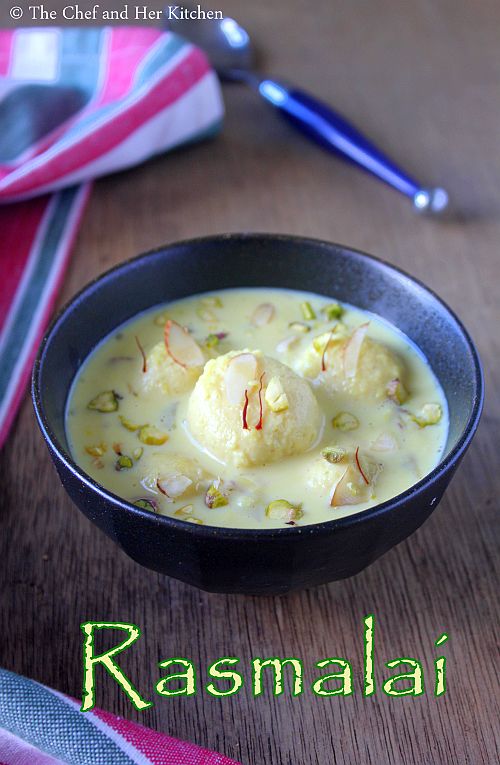
rasmalai
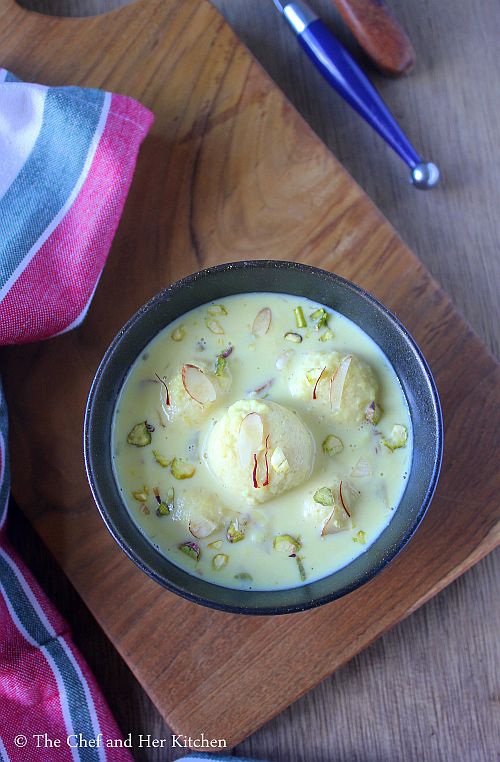
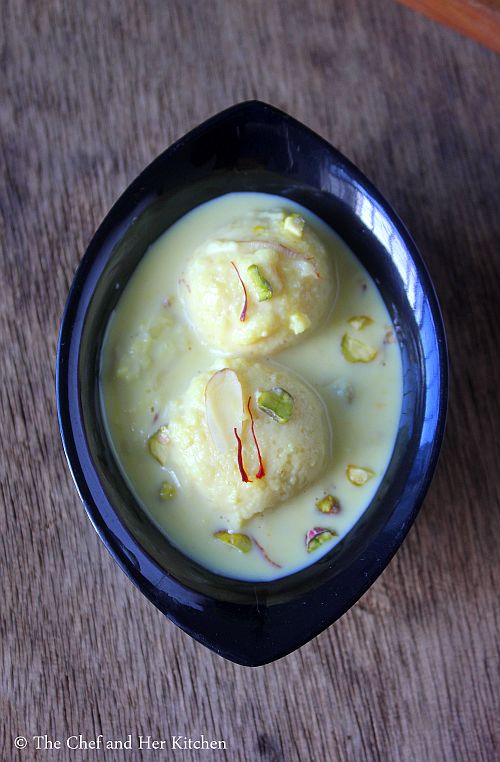
Easy Rasmalai recipe with step by step photos.Rasmalai or Rossomalai is a popular Bengali sweet apart from Rasgulla. Rasmalai is a popular dessert which takes its place in the menu for Weddings or for special occasions. Rasmalai is a soft and spongy flattened cottage cheese dumpling served in thickened milk known as 'Ras'.Rasmalai is a mildly sweetened dessert compared to other sweets and hence one can easily have a couple of them at one go and still not feel heavy too.
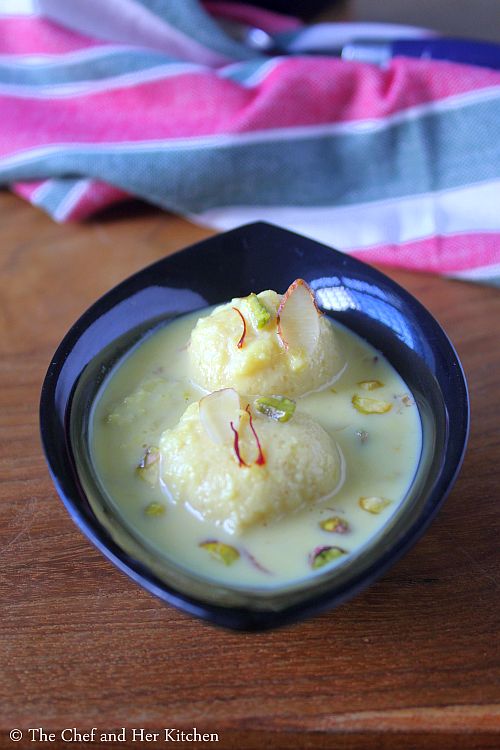
rasmalai
When I had made Rasgullas last time I had saved just a few to make rasmalai as it was a long due for me to post these recipes in my blog.You can check out the detailed process and preparation of Rasgullas with various tips and tricks in my blog here.Once you have rasgullas(either homemade or store-bought) making rasmalai at home is a breeze, though it needs occasional stirring in between.
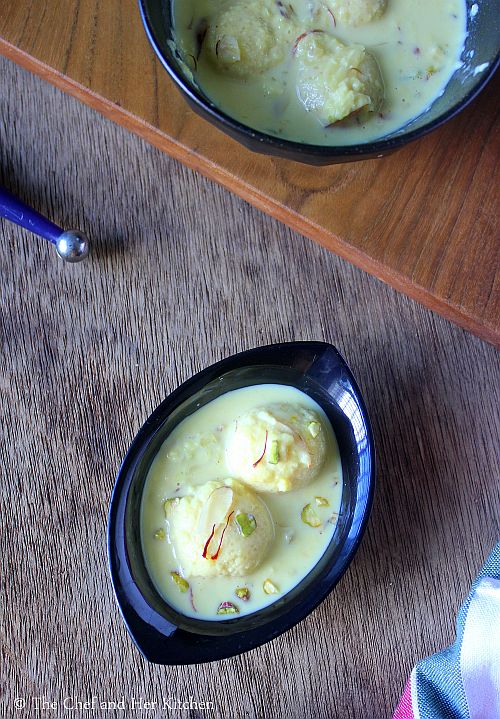
rossomalai
I have used condensed milk to sweeten the ras(milk) and also added a couple of tablespoons of sugar but one can add only sugar to the recipe.The preparation process of ras(thickened milk) is very similar to Basundi or Rabdi just that we do not need to boil it for that long to get a very thick rabri kind but a slightly thickened milk.For a quicker version, one can more quantity of condensed milk and evaporated milk and store bought rasgullas for a quicker rasmalai.Today I am posting the traditional method of preparing Rasmalai at home.As Holi is around the corner,why not prepare this delicious rasmalai and treat your loved ones with a homemade delectable sweet.
rasmalai
Check out other milk based similar sweets in my blog:
rasmalai
Check out how to prepare Rasmali recipe with step by step photos here:
Easy Rasmalai Recipe | Bengali Rossomalai:
Serves 4-5 | Author: Prathibha
Prep time: 10 mins | Cooking time: 30 mins | Total time: 40 mins
Cuisine: Bengali | Category: Sweets/Desserts

Ingredients:
12-15 Rasgullas,homemade or store bought(at room temperature)
1 liter full cream Milk
3-4 tbsp Condensed milk,optional
2 tbsp Sugar(increase it to 1/4 cup if not using condensed milk)
10-12 Almonds
12-15 Pistachios
12-15 strands of Saffron
1/2 tsp Cardamom powder
few saffron strands,to garnish

Method:
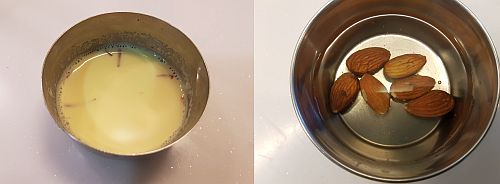
  • Soak almonds in water for 10 mins.Soak saffron strands in 2 tbsp warm milk for 10-15 mins.
  • Cut the soaked almonds and pistachios to small pieces.I used a nut grater to cut the dry fruits.
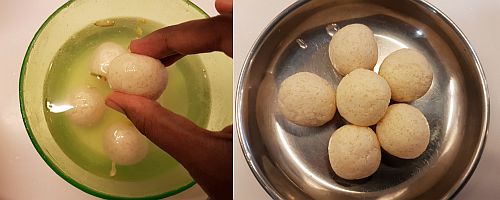
  • Press the rasgullas gently to remove extra syrup from them and keep them ready.If you are making fresh rasgullas for rasmalai,flatten them up while shaping. Click here to see the whole and detailed process of the preparation of rasgullas.
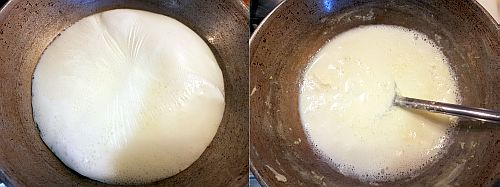
  • Boil milk in a thick kadai and once the milk comes to a boil reduce the flame and let it boil on low-medium flame.Keep collecting the cream formed on the milk and push it to the sides giving place to form more cream.Continue the process until the milk reduces to half.You need to keep stirring in between else the milk gets burnt at the bottom.This process might take roughly 20-25 mins,so be patient enough to check it at regular intervals.
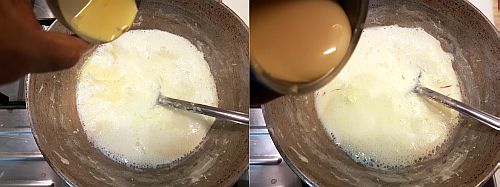
  • Add saffron soaked milk to the reduced milk and then add condensed milk and sugar and mix it nicely.
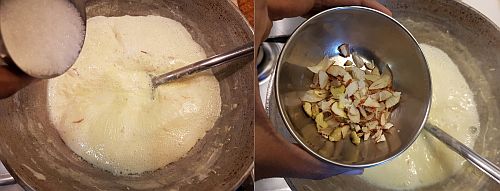
  • Now add chopped dry fruits to it and continue simmering until it becomes slightly thick.Check the sweetness and add more sugar if needed at this stage.
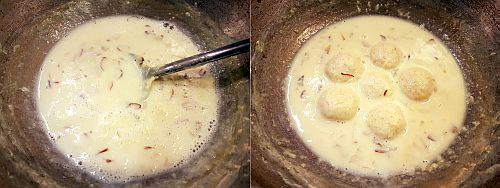
  • Add the squeezed rasgullas to the thickened milk and boil it for 4-5 mins.
  • Cool it and refrigerate it.
Serve it chilled by garnishing with more saffron strands and nuts.

Notes:
  1. You can add rose water at the end for a flavorful one.
  2. Use good quality saffron to get a nice yellow hue for rasmalai, you can alternatively add some yellow color to the chenna while kneading for rasgulla.
  3. If you are making rasgulla at home, try to flatten few before they are put in the syrup and also cook rasgullas(for rasgulla) and flattened rasgullas(for rasmalai) separately so that they get cooked uniformly.
  4. If you are using ready rasgullas,let them come to room temperature and then press them gently to squeeze out the syrup and flatten it gently, else they will break if you do with the cold rasgullas.
  5. The addition of condensed milk is optional,but makes the milk more creamy.I added it as I had it at that moment,else use just the sugar.
  6. For a quicker version use full cream evaporated milk and condensed milk in the recipe and you do not need to boil it for longer.Also use store bought rasgullas for the recipe.
rasmalai
Technorati Tags: , , ,  ,, , ,  ,

Friday, January 13, 2017

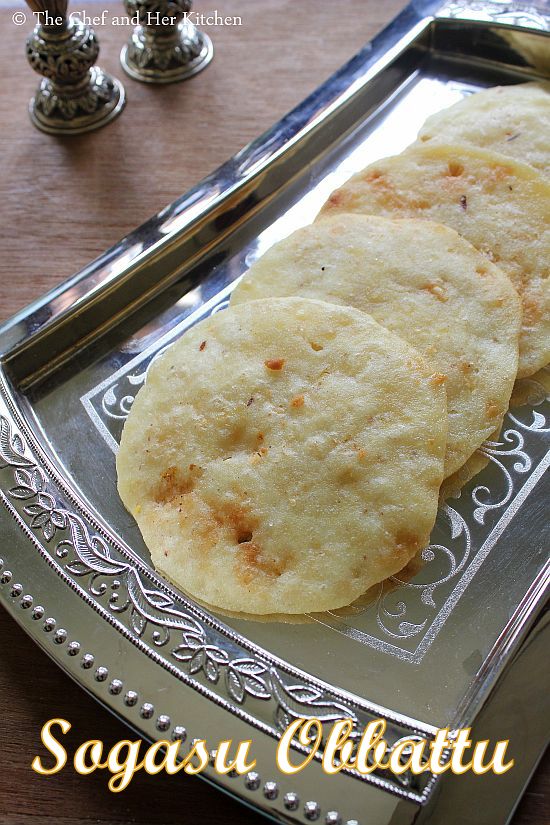
Sogasu Poli | Sogasu Obbattu | Holige Recipes

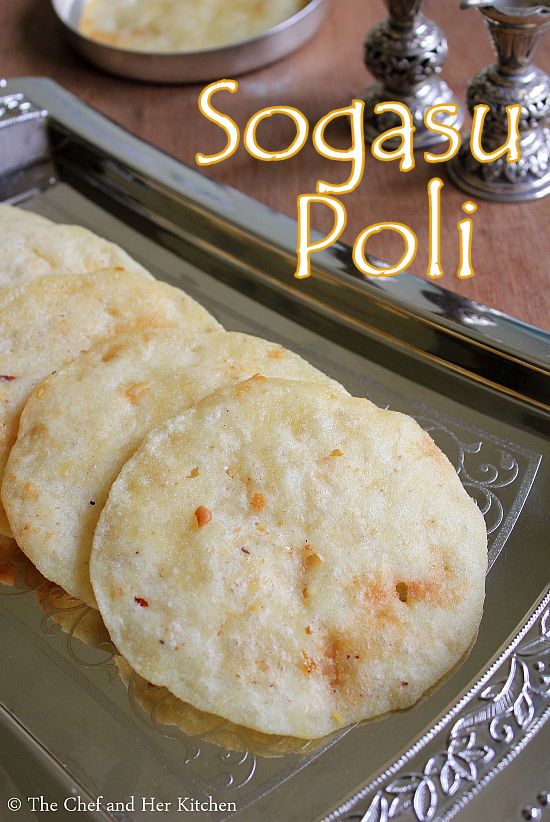
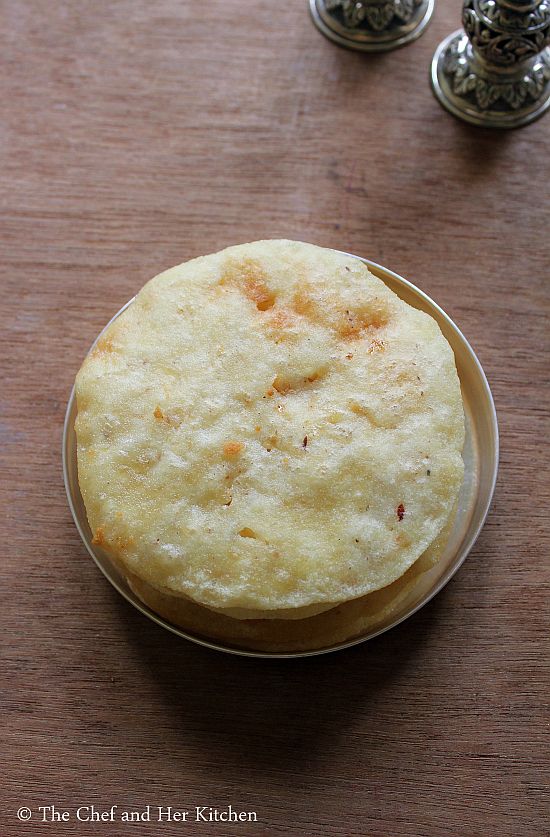
sogasu poli
At my mom's place,any major festival is incomplete without a holige and hence we prepare various holige varieties at home.While the most popular one are  Hoornada holige(Pappu Obattu) and Coconut Holige,my mom prepares various other holige varieties like Til Poli(Nuvvula Obbattu), Shenga Holige(Groundnut holige), Dates Holige etc. While these holiges are fried on the tawa there are few holiges which are deep fried like Paala Obattu(Haalu Holige), Sajjige Obattu(Sajjappa),Garugu Obattu, Sogasu Obbattu and every holige tastes best on its own and has its own importance for the festivals.
sogasu poli
Today I am posting Sogasu Poli recipe which is very similar to Garugu Obattu and Sajjappa.They all look similar and all are deep fried but the filling,taste and texture of each holige is different from each other. Sogasu Poli and Sajjappa uses rawa filling which is made differently for each holige and where as Garugu Obattu uses rice flour filling.I know that it is very confusing if you are hearing all these names for the first time but once you go through all the recipes you can easily differentiate them.The best part about these holiges is that they can be stored easily up to a week, if they last that long!! These can be made ahead and serve as prashad for Navaratri Golu prasadam too, also tastes best when eaten hot as they are super crisp.This is apparently one of my favorite holiges and would gulp a couple of them at one go.As it is Sankranti tommorow, try this different traditional holige recipe to impress your family.
Check out other Holige recipes in my blog:
sogasu poli
Sogasu Poli | Sogasu Obbattu :
Shelf life: 2 days | Yields: 10-12 polis
Prep time:20 mins | Cooking time:40 mins | Total time:60 mins
Cuisine: South Indian | Category: Sweets

Ingredients:
for Stuffing: 1 cup fine Chiroti(Holige) Rava
1 cup fresh grated Coconut
1 cup Sugar,preferably slghtly fine
1/4 cup finely chopped Cashewnuts
1 tsp Ghee

for kanaka(outer cover):
1 cup Chiroti/Holige rawa(baarik rava)
a fat pinch of Salt
1/2 cup Oil(to soak the kanaka)
Oil for deep frying

Method:

for filling:
  • Mix chiroti rava, fresh grated coconut, chopped cashewnuts and sugar in a large bowl nicely until everything is nicely mixed and keep it aside for 2-3 hours.
  • Now the mixture would have become wet and soft.Mix it nicely again.
  • Grease your palms with ghee and make big lemon size balls out of the filling and keep them aside.
 for Kanaka:
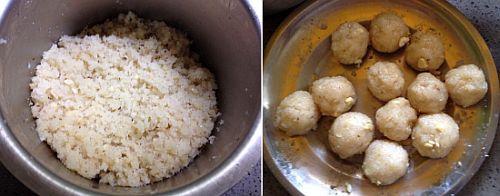
  • Mix chiroti rawa with a pinch of salt to it and add water to it and knead in to a very smooth dough.The consistency of the dough should be very loose than the regular roti dough.
  • Now using your fist hit the dough for few mins to get the softer dough.
      
  • Now place this dough in a deep vessel and pour oil over it until the dough is completely soaked in oil.Let the dough rest for a minimum of 1 hr and up to 2 hrs.Drain the excess oil and use it for other purpose.
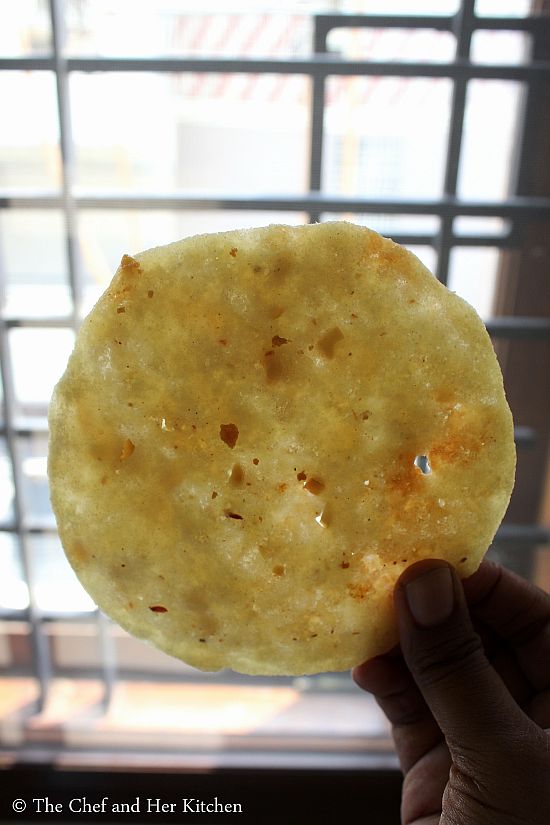
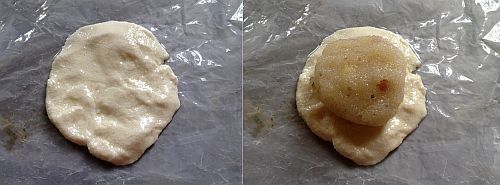
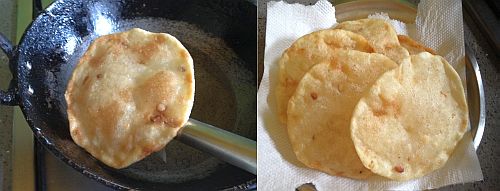
  • See the pics to get to know the consistency of the kanaka.
for making Sogasu Poli:
  • Cut the holige paper into a round and place it on the rolling stone which we use to roll rotis.Grease holige paper or banana leaf or a plastic cover with oil.
  • Pinch a small amla sized dough and flatten it a bit using your hands as shown in the pics and place one round of filling and seal it properly from all the edges like how we do for parathas.
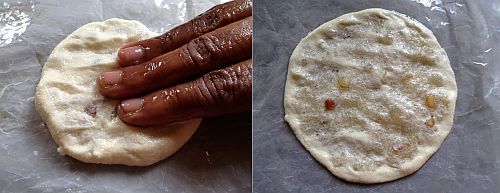
  • Now flatten it slowly with hands to get 3" diameter circle to the size of big pooris.It should not be very thick like paratha nor thin like rotis.See the pictures for clear idea.
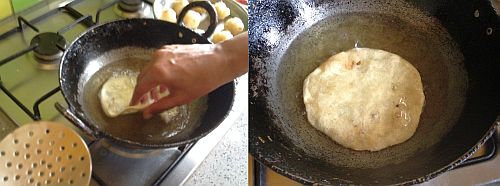
  • Meanwhile heat oil for deep frying in a kadai and gently slide the patted holige from the sides into the oil taking care that oil would not splutter.
  • Deep fry them until they are slightly brown on both side.
  • Drain them on kitchen towels to remove the extra oil.
  • Repeat the process for making holiges,smear the holige paper liberally with oil and follow the same procedure.
Serve them hot/warm or at room temperature.You can store them at room temperature for upto a week.

Notes:
  1. Always make kanaka before proceeding to make filling which helps in saving time.
  2. As these can be stored for a week you can make them ahead if you want.But the fresh ones are more crispier and tastier.
  3. The addition of nuts is entirely optional but it adds a nice taste to every bite of holige.
  4. If you are a health freak instead of deep frying you can even fry it on tawa like how we do for parathas,they taste still good but the deep fried ones taste anytime better.
sogasu obbattu

Wednesday, January 11, 2017

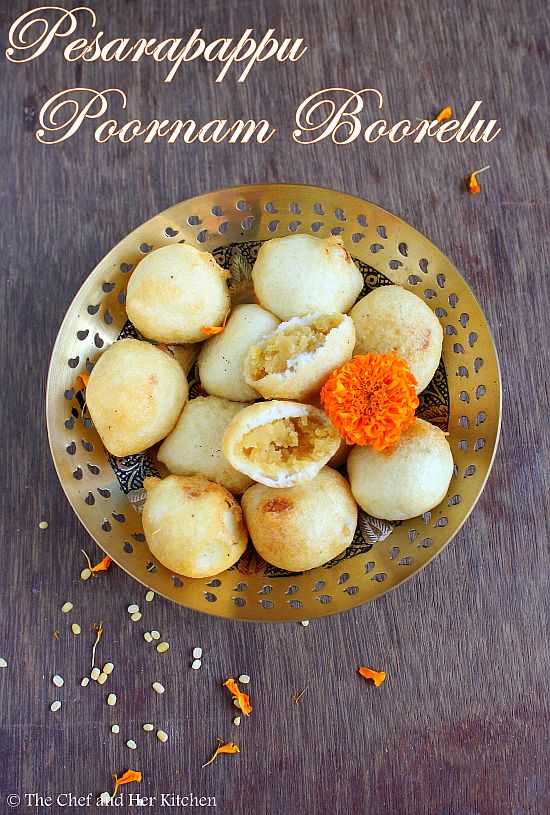
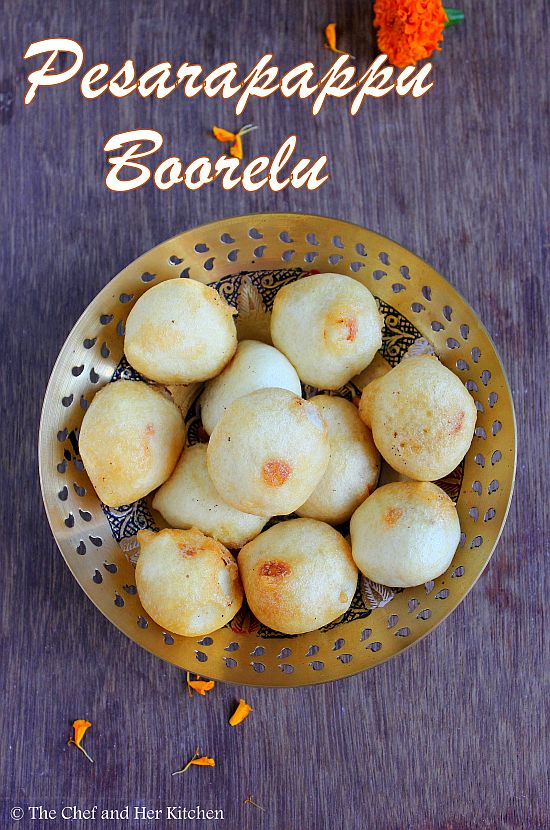
Pesarapappu Boorelu | Pesara Poornam Boorelu | Moong dal Boorelu

pesarapappu poornam boorelu
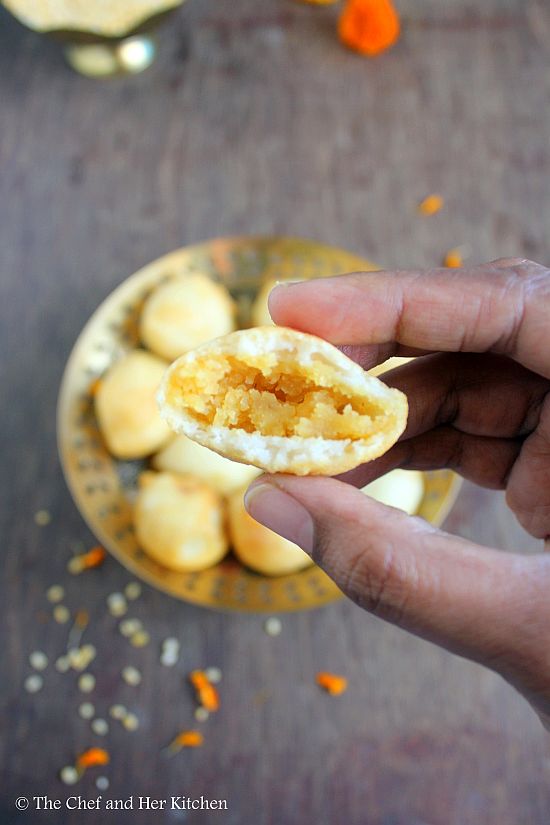
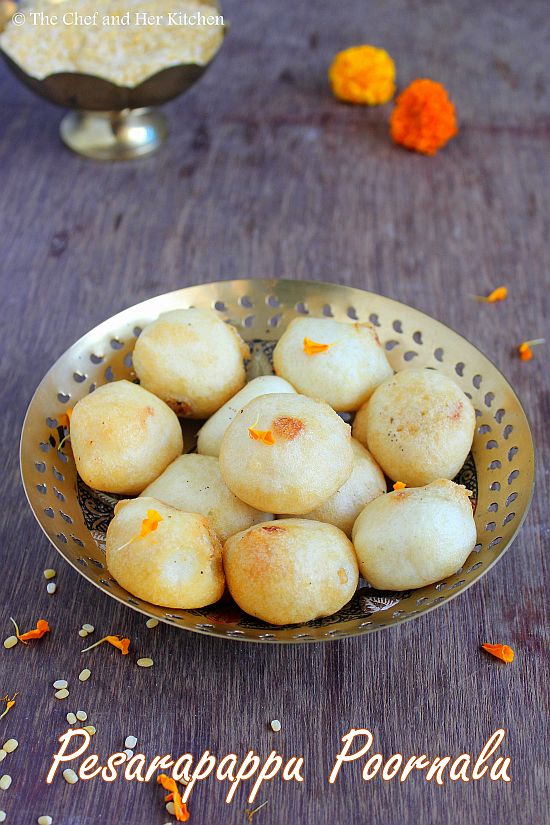
'Boorelu' or 'Poornalu' as they are called in Andhra and 'Sugeelu' or 'Sukkinunde' in Karnataka and 'Suzhiyan' or 'Sugiyan' in Tamilnadu.All these are different names and of course even the preparation methods are slightly different.The fillings and the outer coverings differ from place to place.While many use chana dal as filling for this, traditionally we used toor dal for filling and is prepared in the similar manner like how we make hoorna(filling) for Holige.The outer covering is again made up of lots of variations like urad dal batter,maida batter and rice-urad mixture(like we make) and even the proportions might be different in various households.Today I am posting a variation to the regular Boorelu - Pesarapappu Boorelu,where the filling is made up of moong dal instead of chana dal but the preparation process is almost the same.
pesarapappu poornam boorelu
I was not very fond of sweets during my childhood(it is not the same now) but this is one of those sweets which I used to like even then.As they are mildly sweet and deep fried I used to relish them and used to gobble them with out complaining.My mom is an expert in making them,I must admit that one needs enough practice to prepare these,I have mentioned few notes with my experience and I hope it would be useful if you are attempting them for the first time.
Sankranti is nearing by and try these delicious pesarapappu boorelu for the festival and treat your family and friends with these delicious goodies.If you are looking for the traditional boorelu recipe using chana dal or toor dal then check out the traditional Boorelu Recipe here.
pesarapappu boorelu
Pesarapappu Boorelu | Pesara Poornalu Recipe:

Yields: 20-25 | Author: Prathibha
Prep time: 30 mins | Cooking time: 30 mins | Total time : 1 hr + soaking/fermenting time
Cuisine: Andhra | Category: Sweets

Ingredients:

for Outer layer:

1 cup Urad dal
2 cups Rice(regular sona masuri variety)
Salt to taste(1/2 tsp)
a pinch of cooking Soda

for filling:
1 cupMoong dal
1 cup grated Jaggery
1/2 cup grated fresh Coconut
2-3 Cardamoms
1 tsp Ghee

Oil,for deep frying

Method:

for Outer covering:

  • Soak rice and urad dal together overnight.
  • Next day in the morning,Add one cup of hot water while grinding the rice-urad mixture to a smooth textured batter.
  • Take care that the batter is neither thick nor thin,it should be similar to dosa batter consistency.
  • Add salt to it and let it ferment for 4-5 hrs .
for poornam(filling):
  • Soak moong dal for 10 mins
  • Bring 5-6 cups of water to a boil in a deep vessel and add ghee and soaked moong dal and let it cook until you feel it is almost cooked.Dal should hold its shape and should be firm,it should not become mushy.Press a grain of dal with your fingers to get to know whether the dal is cooked properly or not.
  • Strain this cooked dal over a strainer and let it drain the water and cool completely.Reserve this water to use it in making rasam.
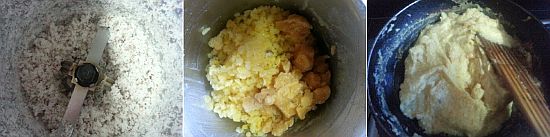
  • Grind grated coconut, cooked and drained moong dal,elaichi powder and jaggery to a slightly coarse paste.
  • Add the cooked paste to the pan and keep stirring it until it turns slightly thick and non sticky and can be made as pedas.Cool the mixture completely
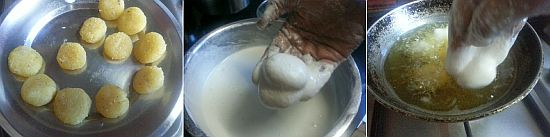
  • Make gooseberry sized balls out of the mixture and keep them covered until its usage.
for making Boorelu:
  • Add a pinch of soda to the rice-urad mixture and mix well.
  • Mean while heat oil in a kadai over medium flame until it is hot.
  • Meanwhile flatten the pedas a bit and keep them ready.
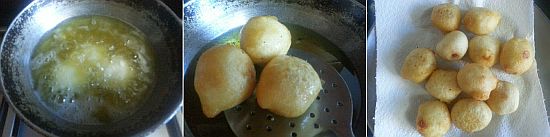
  • Dip each flattened stuffing(poornam) in the rice-urad batter carefully using fingers and drop them slowly in the oil.
  • Pour oil using the slotted spoon from the sides(like how we do for vadas) which helps in puffing up the boorelu nicely.
  • Turn it to the other side and fry until light golden brown in color.
Serve them hot/cold or at room temperature.

Notes:
  1. Rice-urad mixture for the outer layer should neither be thick nor very thin.If the outer layer is very thick it will reduce the sweetness of boorelu as the outer layer would be thick.
  2. While cooking moong dal,take care not to over cook it.Cooked moong dal should be firm to touch and should be cooked inside properly.
  3. The consistency of the filling should be little tight(not very soft) otherwise there is possibility that the filling might splutter while frying them.If your filling is slightly soft then try to refrigerate it for few hours or place them on kitchen towel to remove extra moisture or you can even microwave the mixture for a minute and leave it aside.This will help in hardening the mixture a bit.
  4. You can replace moong dal with chana dal or toor dal and follow the same recipe to make traditional boorelu.
  5. You can even replace jaggery with sugar and follow the same recipe.
  6. For a Vegan version avoid ghee in the recipe.
pesarapappu boorelu

 
back to top